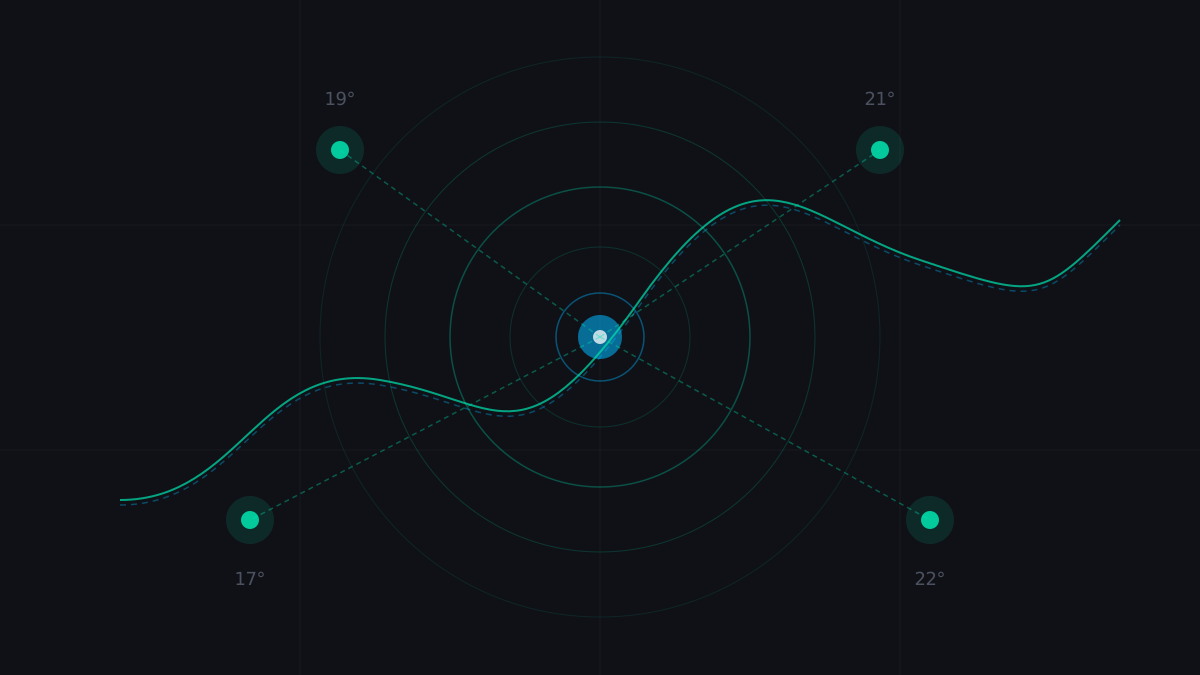
Heating is the one bill you can actually argue with. Lighting got cheap years ago — an LED costs pennies to run. The washing machine does what it does. But heat is a negotiation that happens every hour of every winter day: how much you burn, in which rooms, and whether anyone is even there to feel it.
Most homes lose that negotiation badly. A thermostat holds a single temperature and pushes it into every room, whether the bedroom is empty at noon or the hallway needs half as much warmth as the bathroom. Smart climate control is the practice of winning the argument — and it is the highest-return automation most people will ever install.
Why Heating Is the Bill That Matters
Across much of Europe, space heating and hot water are the largest share of household energy use. In the Netherlands, the majority of a typical home's gas and electricity goes to staying warm. Cut there and you cut the bill where it is thickest.
Everything else a smart home does — lights, speakers, automated blinds — is decoration by comparison. Heating is the payload. It is also the one system that never stops running from October to April, which means a small percentage saved here compounds into real money every single month.
What Smart Climate Control Actually Is
The phrase gets thrown around loosely, so let's be precise. Smart climate control is three distinct layers — and you can buy them separately or together.
The thermostat that learns
A smart thermostat does what the old round dial could not: it lowers the temperature while you sleep or are away, then brings it back before you return. It learns the thermal mass of your house — how long the rooms take to warm — and starts early, so you walk into 20°C rather than a cold house on its way to 20°C.
The US EPA's Energy Star program estimates this setback behaviour alone saves around 8% of heating and cooling costs a year — before any of the fancier tricks.
Zones — heat only where people are
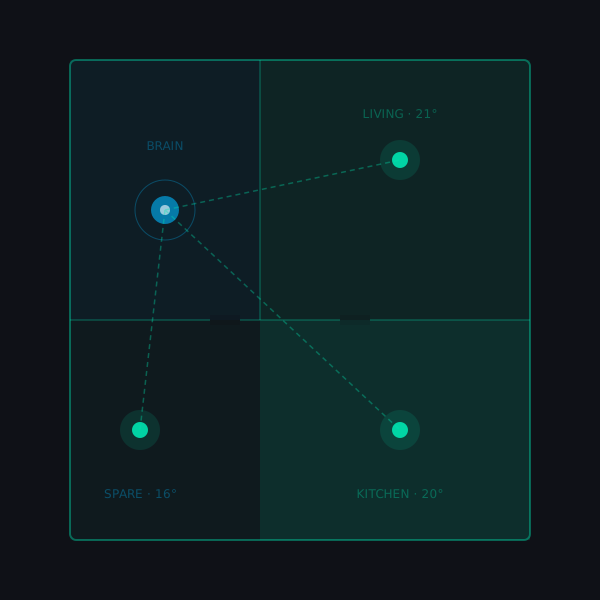
The second layer is zone control. Instead of one temperature for the whole house, each room gets its own valve or actuator and its own schedule. The bedroom heats in the morning, the living room in the evening, the spare room almost never. Empty rooms stop being heated at all.
This is where the numbers get serious: heating rooms nobody is in is the purest waste a house produces. A single local controller — a Loxone Miniserver, a KNX line, or a Home Assistant box — can run a dozen zones from one brain. The principle is the same one we apply to the whole home in our guide to smart home automation without vendor lock-in.
The weather-adaptive brain
The third layer is the one that feels like intelligence. The controller reads the weather forecast, the indoor temperature, and the presence of people, then decides how hard the heating should work. On a mild, sunny afternoon it backs off before the house overheats. Ahead of a cold snap it starts early, so you never arrive home to a cold shell.
This matters enormously when a heat pump is involved. A heat pump is most efficient running long and low rather than short and hard, so the brain wakes it early on a freezing morning instead of racing it to catch up. Weather-compensated heating curves — built into modern Loxone and KNX climate controllers — adjust the flow temperature to the outside conditions automatically.
The Numbers — What You Can Realistically Save
Be sceptical of anyone promising 50%. The honest range looks like this:
- Smart thermostat setback alone: roughly 8–10% a year.
- Adding zone control: 15–25% in a typical house, more if you currently heat rooms you rarely use.
- Full weather-adaptive control with presence detection: 20–40%, but only in a home that was wasting that much to begin with.
Two caveats matter. First, the better insulated the home, the less there is to save — which is a good problem to have. Second, the savings come from stopping waste, not from magically heating the same space with less energy. A house already run lean will not drop 40%.
What Smart Climate Control Costs in 2026
Prices split into tiers that map neatly onto the three layers above.
| Approach | Whole-home cost | Who it suits |
|---|---|---|
| Smart thermostat (Tado, Nest, etc.) | €150 – €400 | Renters, first step, single-zone homes |
| Smart radiator valves (TRVs) + hub | €500 – €1,500 | Existing homes with radiators — retrofits |
| Zoned climate on a local controller (Loxone / KNX) | €2,000 – €8,000 | New builds, renovations, larger homes |
| Heat pump + full climate integration | €8,000 – €25,000+ | Electrification projects, whole-system |
The first two rows are consumer hardware you can fit in an afternoon. The last two are systems, usually planned alongside a build or a heat pump — which is exactly when the wiring is cheapest. Our Loxone smart home cost guide breaks down where that budget actually goes.
Heat Pumps Change the Rules
A heat pump does not behave like a gas boiler. It delivers lower-temperature water over longer periods, which means the old habit of blasting the thermostat to warm a cold house quickly is exactly wrong for it. Smart control is not a luxury on a heat pump — it is what lets the system run efficiently at all.
The European Heat Pump Association tracks this shift: heat pumps are now the default for new-build heating across much of the EU, and every one of them wants a controller that thinks in weather curves rather than on/off. If you are planning a heat pump, plan the climate control at the same time — retrofitting the intelligence afterwards is more expensive and less effective.

Your Heating Should Not Need the Internet
There is a quieter reason to keep climate control local. Heating is the one system that must work on the coldest night of the year — which is also when storms take out the power and, often, the internet. A cloud-dependent thermostat is a single point of failure in the one system that can freeze your pipes.
A local controller keeps deciding even when the world outside goes dark. The same offline-first thinking is why we wrote about privacy-first smart home local voice control — the principle is identical, whether the system is speaking or heating: the intelligence belongs inside the walls, not in a server somewhere else.
How to Choose
Most of the decision reduces to four questions. Answer them honestly and the choice makes itself.
- Is this a retrofit or a build? Retrofit → smart thermostat plus smart radiator valves. Build or renovation → wire the zones now, while the walls are open.
- What heats the house? Gas boiler → TRVs and a smart thermostat do plenty. Heat pump → a weather-compensated controller is non-negotiable.
- How many rooms do you actually use? Empty-room heating is your biggest waste; zone control is what recovers it.
- Do you want it to survive an outage? Choose local control over cloud-only, and check that the schedule logic runs on the controller itself, not on a phone app.
There is no single right answer, only the right answer for your house and your habits. The mistake is letting a salesperson collapse that nuance into one "best" system.
Frequently Asked Questions
Does a smart thermostat really save money on heating?
Yes. The US EPA's Energy Star program estimates that using setback schedules — lowering the temperature while you are asleep or away — saves roughly 8% of heating and cooling costs a year on its own. Adding zone control and weather-adaptive behaviour pushes the total toward 20–40% in a home that was previously heating empty rooms.
What is the difference between a smart thermostat and zone control?
A smart thermostat controls one temperature for the whole house, learning your schedule and lowering the setpoint when you are away. Zone control goes further: each room gets its own valve or actuator and its own schedule, so empty rooms stop being heated at all. Zone control is where the largest savings come from.
How much does smart climate control cost in 2026?
A smart thermostat costs €150–€400 and fits in an afternoon. Smart radiator valves for a whole home run €500–€1,500. A zoned system on a local controller such as Loxone or KNX costs €2,000–€8,000 and is usually planned during a build or renovation. Full heat-pump climate integration starts around €8,000.
Do I need a heat pump for smart heating to make sense?
No. Smart thermostats and smart radiator valves deliver savings on a conventional gas boiler too. But a heat pump benefits most from smart control, because it is most efficient running long and low — a weather-compensated controller that adjusts flow temperature to outside conditions is essential for getting the best from a heat pump.
Does smart climate control work without an internet connection?
A properly built system does. Local controllers — a Loxone Miniserver, a Home Assistant box, or a KNX line — keep running schedules and zone logic entirely inside the home, so heating keeps working if the internet drops. Cheap cloud-only thermostats are the exception, and heating is the last system you want dependent on a server somewhere else.
Can I add smart heating to an existing home without rewiring?
Yes. Smart radiator valves screw onto existing radiators and talk to a hub wirelessly, and a smart thermostat replaces the wall unit — no new cabling required. Wired zone control is only worth it when walls are already open during a build or full renovation.
Heat pump shift: European Heat Pump Association — data and policy on Europe's move to heat-pump heating
Local climate control: Home Assistant — Climate integration — how an open local hub handles thermostats, TRVs and heat pumps
Building automation standard: KNX Association — the open standard for wired climate, lighting and shading control